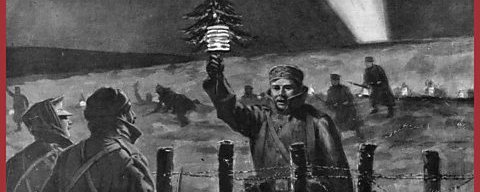
The historic Christmas Truce of 1914 reads like a fairy tale, but strip away the romanticism and you will find many factors that contributed to its birth.
The War Had Reached a Stalemate
Following a flurry of military manoeuvres which culminated in the Race to the Sea and the First Battle of the Marne, a vast trench system was established stretching some 400 plus miles from the North Sea, through Belgium and France to the Swiss frontier. Known as the Western Front, it would witness some of the war's bloodiest battles and last for its entirety. This would be the beginning of a prolonged period of trench warfare with very little ground being gained for the majority of the ensuing years.
Armies bedded into deep trenches as the winter began to bare its teeth. Relentless rain contributed to atrocious conditions that cost many lives. Men developed horrific diseases such as Trench Foot — caused by prolonged exposure to cold damp conditions — which led to amputations in severe cases and even claimed lives. Tragically, soldiers drowned in the mud too, and it is estimated around a third of all fatalities were a direct result of the conditions endured.
No Man's Land was strewn with stricken corpses of the fallen due to heavy fighting in early to mid-December. Both sides were eager for the opportunity to recover their comrades and afford them a dignified burial. There were a number of burial ceremonies held on Christmas Day 1914, with instances of soldiers from opposite sides working together to lay them to rest.
Shared Empathy
Trenches could be as little as 50 yards apart and cordial communication often occurred between warring parties. Soldiers shared the same miserable existence with their foes and related to their suffering. A range of emotions ensued as men realised they had far more in common with their enemy than the military hierarchy had led them to believe.
Initial feelings of hatred began to subside as men began to question the point of the war and a shared empathy developed. Most had expected to be home by Christmas following a short period of conflict, but their reality bred a growing realisation that death may now be the most likely way out — and many began resenting the war deeply.
Exhaustion
Intense fighting, brutal weather, supply shortages, waterlogged conditions and disease left armies depleted and men exhausted. Soldiers on all sides were in desperate need of a break.
A live and let live mentality was quietly developing in many quarters. Subsequently short truces evolved naturally rather than being pre-planned revolutionary acts.
The Christmas Spirit
Christmas evoked strong emotions of peace and goodwill among men desperate to be back home celebrating with their families. There was a desire on both sides to celebrate the Christmas season as best they could. Gifts flooded in from friends, families, charities and even strangers. People back home were determined to show that those on the frontline had not been forgotten during the festive period.
Christmas in Germany is rooted in tradition and soldiers lit lanterns and placed decorated trees across their trenches. Songs were sung across the trenches as cheer replaced fear. A craving for normality and some much needed civil interaction made the Christmas Truce inevitable, although intense fighting carried on as normal in some areas.
A Perfect Storm
A mixture of disdain for the war, empathy for their foes, homesickness, exhaustion, the conditions endured and the onset of the Christmas season created a perfect storm for peace to temporarily reign. A sense of pure escapism that tragically would never be experienced again for the remainder of the Great War.