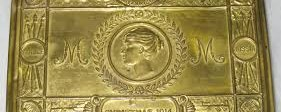
The outbreak of war cast a dark shadow over the 1914 Christmas season, with chairs at the dinner table left empty across the country. Although the brave young men had gone to fight, they certainly weren't forgotten as Christmas approached. Amongst those left behind there was a real determination to make Christmas as bearable as possible for the troops, with swathes of cards and gifts arriving daily at the frontline. One person who shared their desire was Princess Mary.
The Sailors and Soldiers Fund
At the tender age of 17, she took it on herself to launch a campaign in October 1914 called the Sailors and Soldiers Fund. The goal was to provide everyone serving in uniform with a Christmas gift. Initially she wanted to fund these gifts from her personal allowance, but this proved impractical.
The public response was overwhelming. Over £150,000 was raised — allowing the gesture to eventually be extended to all serving personnel on Christmas Day, the wounded, nurses, widows, and parents of the fallen. Eventually over 2 million boxes were produced and distributed, with a small number — due to logistical challenges — not being delivered for a few years.
Inside the Tin
The small brass tins were embossed with the Princess's portrait encircled by a laurel wreath. The contents included:
- Packets of tobacco and cigarettes
- A photographic portrait of Princess Mary
- Christmas cards from the Princess, King George and Queen Mary
There was also a non-smokers' offering (around 1 in every 28 produced) that included a packet of acid tablets (a type of sour lemon-flavoured sweet) and a stationery case containing a pencil, paper, and envelopes.
"Please will you help me?"
Princess Mary took a great personal interest in the project, and this was clearly evident in the impassioned plea contained within an official letter bearing her signature, issued by Buckingham Palace, explaining the purpose of the fund:
I want you now to help me to send a Christmas present from the whole of the nation to every sailor afloat and every soldier at the front. I am sure that we should all be happier to feel that we had helped to send our little token of love and sympathy on Christmas morning, something that would be useful and of permanent value, and the making of which may be the means of providing employment in trades adversely affected by the war. Could there be anything more likely to hearten them in their struggle than a present received straight from home on Christmas Day? Please will you help me? — Princess Mary, 1914
A Legacy
This nationwide gesture was greatly appreciated. Many soldiers sent their cherished boxes home for safekeeping, some with all the contents intact. Others used them as cigarette cases or to store valuables. It showed that at Christmastime, they remained firmly in the minds and hearts of the British people.