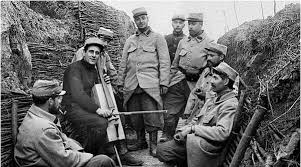
Music played a pivotal role in the Great War. Primarily, men used it to boost morale, ease boredom and build camaraderie when existing for long periods in the most squalid conditions imaginable. Belgian winters were often very wet and unrelenting, offering precious little respite.
Marching Songs
Marching songs were often adopted by soldiers to keep up their spirits and alleviate fear as they walked en masse to the frontline. Popular marching songs sung by the troops included:
It's a Long Way to Tipperary (1912)
Written by Jack Judge and Harry Williams. A cheerful Irish-themed marching song that became iconic early in the war. British troops, including Irish regiments like the Connaught Rangers, sang it as they deployed to France in 1914. It evoked homesickness, thoughts of sweethearts and a longing for simpler times.
Pack Up Your Troubles in Your Old Kit-Bag (and Smile, Smile, Smile) (1915)
By George Asaf and Felix Powell. An optimistic marching anthem urging soldiers to stay cheerful despite the hardships they were enduring. The repetitive "smile, smile, smile" chorus made it a real morale booster.
Other commonly sung marching songs included Keep the Home Fires Burning and The Long, Long Trail.
Trench Songs — The Cynical Side
Trench songs tended to be far more cynical. Soldiers often improvised, creating their own songs by pairing lyrics that reflected the grim reality of their situation with existing well-known tunes. These songs were extremely raw, morbid, and even anti-establishment on occasion. Examples included:
Hanging on the Old Barbed Wire
A bitter song about the futility of war, with verses listing officers and NCOs enjoying relative safety while the "poor old soldier" hangs dead on the wire in No Man's Land.
We're Here Because We're Here
Sung to the tune of "Auld Lang Syne," repeating the title endlessly. It captured the resigned confusion and hopelessness many felt.
When This Lousy War Is Over
A wistful, parodic take on a hymn — exuding dreams of home while criticising the abundant misery of war.
Bombed Last Night / Hush, Here Comes a Whizz-Bang
Darkly humorous songs about artillery shells ("whizz-bangs") and gas attacks.
When Very Lights Are Shining
Sung to "When Irish Eyes Are Smiling," describing the eerie glow of Very flares (rockets used to illuminate No Man's Land at night) and the fear experienced nervously awaiting attacks.
Improvised Instruments
Instruments like mouth organs (harmonicas), trench cellos (improvised from packing crates and wire), and portable gramophones (including "trench models") were commonplace in trenches, facilitating impromptu singalongs.
How Music Was Used
Music was incorporated in a multitude of ways:
- During sustained periods of boredom, songs were sung to pass the time
- As a coping tactic to drown out fear whilst enduring intense shelling
- In concerts arranged by battalions, welfare groups, the YMCA or the Salvation Army to provide light entertainment and boost morale
- On marches to foster unity and team spirit — often a useful tool in taking soldiers' minds off bad weather or the destination they were heading to
- On rare occasions, songs were sung across trench lines and exchanged with enemy forces
The most famous instance of this last use came on Christmas Eve 1914, when German soldiers started singing "Silent Nacht" and the British forces responded in kind. This led to a number of unofficial Christmas Truces being agreed across the Western Front.
Music as Escape
More than anything, music was a much-needed escape from the brutal horror and drudgery of war. Providing solace to the fearful, a slither of normality, and an effective way to while away the hours. It was used by battalions to raise spirits and foster a "we're all in it together" mentality.