The Christmas Truce of 1914 has been heavily romanticised in the ensuing years, held up as a striking example of humanity. But what was it really like for the men who took part?
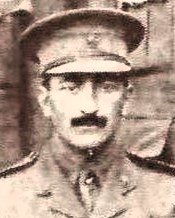
One of the most detailed first-hand accounts committed to paper came from the pen of Captain Reginald John Armes of the 1st Battalion North Staffordshire Regiment. The letter to his wife Eleanora was written on the evenings of Christmas Eve and Christmas Day 1914, documenting the astounding events of each day.
Christmas Eve — The Guns Fall Silent
Armes remembered arriving at the trenches on Christmas Eve to the familiar sound of constant firing, but to his surprise at around 7pm the guns stopped completely. He then recalled German soldiers shouting "no shooting" from their nearby trenches, leading to men from both sides climbing out and sitting on the parapet.
All our men got out of their trenches and sat on the parapet, the Germans did the same, and they talked to one another in English and broken English. I got on top of the trench and talked German and asked them to sing a German Volkslied, which they did, then our men sang quite well and each side clapped and cheered the other. — Captain Reginald John Armes
He talks about walking across No Man's Land accompanied by his friend Pope to meet a German officer. The cordial exchange that followed led to a truce being agreed until midnight on Boxing Day, namely to facilitate the burying of the dead.
At times we heard the guns in the distance and an occasional rifle shot. I can hear them now, but about us is absolute quiet. I allowed one or two men to go out and meet a German or two half way. They exchanged cigars, a smoke and talked. The officer I spoke to hopes we shall do the same on New Year's Day, I said "yes, if I am here". I felt I must sit down and write the story of this Xmas Eve before I went to lie down. Of course no precautions are relaxed, but I think they mean to play the game. All the same, I think I shall be awake all night so as to be on the safe side. It is weird to think that to-morrow night we shall be at it hard again. If one gets through this show it will be an Xmas time to live in one's memory. The German who sang had a really fine voice. — Captain Reginald John Armes, Christmas Eve 1914
Christmas Day — Meeting in No Man's Land
His account of Christmas Day described how they buried the dead before meeting in the middle where cigars were smoked and gifts exchanged. He recalls being within a yard of the German trenches and describes the whole experience as extraordinary.
The Germans are Saxons, a good looking lot, only wishing for peace in a manly way, and they seem in no way at their last gasp. I was astonished at the easy way in which our men and theirs got on with each other. — Captain Reginald John Armes
He describes the absurdity of what he calls a "peace day" and wonders about who will start the shooting when fighting recommences. He also makes reference to how happy the men are on both sides to be getting a day off.
A Letter to Remember
He finishes the letter with a plea to his wife:
Keep this letter carefully and send copies to all. I think they will be interested. It did feel funny walking over alone towards the enemy's trenches to meet someone half-way, and then to arrange a Xmas peace. It will be a thing to remember all one's life. — Captain Reginald John Armes
It is clear from his words that the Christmas Truce had a profound effect on him and many of the other men who took part. Captain Jack Armes as he was affectionately known went on to survive the remainder of the war and return home. He was born in King's Lynn on the 17th March 1876 and died in Colchester on the 15th April 1948, aged 72 years.