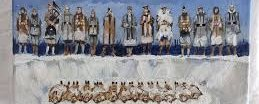
Christmas Day 1914 on the Western Front provided welcome light-hearted relief for thousands of soldiers, but it wasn't all laughing, joking and casual kickabouts. For many, the frosty morning brought unified displays of reverence as the dead were laid to rest — stricken souls that had lain in No Man's Land for up to a matter of weeks.
A Rare Opportunity
The Christmas Truce gave all sides a rare opportunity to afford their fallen comrades an honourable and dignified burial in relative safety. The run-up to Christmas had been marred with a series of short but brutal battles, leaving many bodies decaying in the unforgiving plains of No Man's Land. Religious services and the sombre task of burying friends was conducted jointly in many cases as opposing sides stood side by side with heads respectfully bowed. The largest joint burial service held saw 100 brave men interred.
It was an extraordinary and most wonderful sight. The Germans formed up on one side, the English on the other, the officers standing in front, every head bared. — Second Lieutenant Arthur Pelham Burn, Sixth Gordon Highlanders
Digging Together in Frozen Ground
Large graves were dug and in some instances men from both sides were buried together as military Chaplains conducted impeccably observed services.
A truce was arranged for daylight hours on Christmas Day specifically for burying the dead from fighting about a week earlier. Soldiers from both sides gathered the bodies and laid them out in rows. Digging parties worked on common graves in the frozen ground. Once filled, German officers stood respectfully while the British chaplain conducted a short service. The observer called it "one of the most impressive things I have ever witnessed," with friend and foe standing bare-headed as the padre blessed the bodies against the frosty landscape. — Subaltern eyewitness account
After heavy fighting on 18–19 December, arrangements were made to bury the dead. Germans brought bodies to a halfway line. British and German detachments formed up, and chaplains from both sides read prayers alternately with great solemnity and reverence. It was described as heartrending to see familiar comrades lying dead, some with terrible wounds. — Eyewitness account, 2nd Scots Guards, Fleurbaix area
A Symbol of Solidarity
The plethora of joint burial services that took place on that fateful Christmas morn, though undeniably pragmatic — allowing soldiers to recover, identify and bury bodies — were also highly symbolic. It was the first unified show of solidarity against an ugly and unforgiving war.
After long winter months of existing in squalid conditions, a sense of empathy had developed among bands of exhausted young men united in their hatred of the Great War. In burying their dead together, enemies became, for one extraordinary morning, simply human beings mourning human beings.